| Rep. Allen and
Rep. Michaud Introduce Broadband
Data Bill |
|
10/18. Rep. Thomas Allen (D-ME) and
Rep. Michael Michaud (D-ME) introduced HR 3893
[LOC |
WW],
the "Connect America Now Act", a bill that would create a federal grant program
for the study of broadband deployment.
The bill would create a program titled "State Broadband Data and Development
Grant Program". It would be administered by the
Department of Commerce (DOC), not the
Federal Communications Commission (FCC).
It would provide grants "for the development, implementation and support of
statewide initiatives to identify and track the availability and adoption of
broadband services within each State".
Grant money would be used "to provide a baseline assessment of broadband
service deployment in each State", "to identify barriers to the adoption by
individuals and businesses of broadband service and related information
technology services", and "to create within each State a geographic inventory
map of broadband service, which shall (A) identify gaps in such service through
a method of geographic information system mapping of service availability at the
census block level; and (B) provide a baseline assessment of statewide broadband
deployment in terms of households with high-speed availability".
The bill further provides that funding could be used "to establish programs to improve
computer ownership and Internet access for unserved and underserved populations".
The bill would authorize the appropriation of $40 Million for each of fiscal
years 2008 through 2012.
The bill was referred to the House
Commerce Committee (HCC).
|
|
|
| House Bill Would Require Schools Receiving
E-Rate Subsidies to Train Kids in Appropriate Online Behavior |
|
10/17. Rep. Brad Ellsworth (D-IN) introduced
HR 3871 [LOC |
WW], the "e-Keep
the Internet Decent and Safe Act of 2007" or "e-KIDS Act of 2007", a bill to
require schools that receive e-rate subsidies to instruct children about "appropriate
online behavior" in social networking web sites, and with respect to
"cyberbulling".
This bill would amend 47 U.S.C. § 254(h)(5)(B).
Section 254 pertains to Federal Communications
Commission (FCC) administered universal service tax and subsidy programs. Subsection
254(h)(5) imposes obligations upon schools that receive e-rate subsidies.
Subsection 254(h)(5)(b) already requires schools receiving e-rate subsidies to
certify that they are enforcing "a policy of Internet
safety for minors that includes monitoring the online activities of minors and
the operation of a technology protection measure with respect to any of its
computers with Internet access that protects against access through such
computers to visual depictions that are (A) obscene; (B) child pornography; or
(C) harmful to minors", and that they are "enforcing the operation of such
technology protection measure during any use of such computers by minors".
HR 3871 would add an additional requirement. Schools
receiving e-rate subsidies must also certify that they are "educating minors
about appropriate online behavior, including interacting with other individuals
on social networking websites and in chat rooms and cyberbullying awareness and
response".
This requirement would not apply to use of internet access at schools by
adults. This requirement would not apply to libraries that receive e-rate subsidies.
This requirement would not apply to schools that are not subsidized by the
e-rate program.
The bill was referred to the House
Commerce Committee (HCC).
|
|
|
| More House Bills |
|
10/16. Rep. Steve Cohen (D-TN),
Rep. John Conyers (D-MI), and Rep.
Linda Sanchez (D-CA) introduced HR 3848
[LOC |
WW],
the "Security from Political Interference in Justice Act of 2007".
This bill would attempt to limit White House staff communications with
employees of the DOJ regarding any "ongoing investigation" by the DOJ, by
requiring the DOJ and White House Counsel to disclose such communications in
reports to the House Judiciary Committee (HJC) and the
Senate Judiciary
Committee (SJC). This bill is different from, but related to, S 1845
[LOC |
WW]. See
also, story titled "Sen. Whitehouse and Sen. Leahy Sponsor Bill to Limit
Contacts Between White House and DOJ" in
TLJ Daily E-Mail
Alert No. 1,632, August 31, 2007. The bill was referred to the HJC. All of
the original sponsors are members.
10/16. Rep. Al Wynn (D-MD) and
Rep. G.K. Butterfield (D-NC) introduced
HR 3862 [LOC |
WW],
the "Preparing America's Seniors for the Digital Transition Act of 2007", a bill
to "improve public awareness in the United States among older individuals and
their families and caregivers about the impending Digital Television Transition
through the establishment of a Federal interagency taskforce between the Federal
Communications Commission, the Administration on Aging, the National
Telecommunications and Information Administration, and the outside advice of
appropriate members of the aging network and industry groups". It was referred to the
House Commerce Committee.
|
|
|
| ITIF Paper Summarizes Broadband Policy
Debate |
|
10/19. The Information Technology and Innovation Foundation
(ITIF) released a paper [PDF]
titled "The Role of Competition in a National Broadband Policy". The
author is Robert Atkinson, head of the ITIF.
He wrote that "broadband displays natural monopoly or duopoly characteristics.
Because of the nature of the broadband industry, there are significant tradeoffs between more
competition and goals of efficiency, innovation, low prices, and higher speeds and broader
deployment." He argued that while most participants in the current debate advocate
competition, "competition is not an end in itself but rather a means
by which the economic system produces the benefits citizens desire."
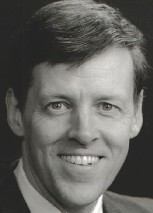 Atkinson (at right)
wrote that there are two views of competition, the "engineers' view" and the
"economists' view". Atkinson (at right)
wrote that there are two views of competition, the "engineers' view" and the
"economists' view".
The engineer's view is that "It is expensive to build a standard broadband
network to homes, and even more expensive to build a high performance one with large data
capacity (e.g., fiber optic). Given these economics and since Internet protocol networks
are just transmitting bits from applications that reside outside the network, why not just
build one network?" (Parentheses in original.)
Thus, "broadband networks are a natural monopoly; hence, encouraging the
deployment of more than one will lead to a waste of societal resources."
In contrast, wrote Atkinson, the economists' view is that "competition brings
important consumer benefits by forcing companies to cut costs, improve service, and reduce
``excessive´´ profits. Without competition, companies get lazy, limit their
innovation, provide poor service, and reap monopoly profits."
"Both engineers and economists bring important perspectives to the issue, and
ignoring either set will lead us to the wrong policy conclusions." He
continued that "The issue, then, becomes one of how to attain the right balance between the
cost-efficiency of fewer networks and the competitive benefits of more networks."
He also stated that there are currently four policy options:
- keep the same number of pipes -- two;
- spur the deployment of more pipes;
- force incumbents to open up existing pipes to competitors --
by mandating unbundling; or
- regulate duopoly pipes.
As for two pipes, he wrote that now, "cable and telco
broadband providers are competing quite intensely to gain new customers", and
this "appears to compensate for the fact that the market is largely a duopoly."
But what happens when "most households have adopted broadband?" It may be
difficult to switch providers, so "broadband providers may be able to exercise
more market power."
As for deploying more pipes, Atkinson argued that "The right policy
regarding more broadband pipes is: ``Enable, but don’t promote.´´"
With respect to unbundling proposals, he concluded that "unbundling or open pipes is
not a transitional model to get to facilities-based competition."
"Unbundling has both benefits and costs. First, on the plus side, unbundling is a
relatively quick way to get competition." However, "On the negative side, though,
unbundling reduces incentives of incumbents to invest in larger pipes. If the incumbent has to
resell the pipe, particularly at very low prices, where is the incentive to invest a large
amount of capital in a better pipe (e.g., fiber)?" (Parentheses in original.)
As for the fourth option, regulation, he argued that it "has the advantage of limiting
any current or potential abuse of market power", but that it "can also reduce
incentives for investment". He added that two alternative methods of regulation are
regulating prices, and "antitrust and consumer protection rules".
Atkinson advised that "Although each policy track will achieve some
benefits, each also brings with it costs and risks. Policymakers need to balance
the desire for more competition to enhance consumer welfare in the broadband
realm with the need for the most efficient broadband industry structure."
|
|
|
| PFF Paper Equates Fairness Doctrine
with Net Neutrality |
|
10/19. The Progress & Freedom Foundation (PFF)
published a short
paper
[3 pages in PDF] in its web site titled "Net Neutrality: A Fairness Doctrine for the
Internet". The author is the PFF's
Adam Thierer.
He opposed both the Federal Communications
Commission's (FCC) repealed fairness doctrine, which regulated broadcast speech, and current
network neutrality proposals, which would regulate internet access providers. Thierer
argued that both are advanced by similar persons for similar reasons.
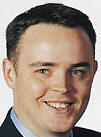 Thierer (at right) wrote that
"Proponents of net neutrality use the same kind of fantastic rhetoric to describe it
that they once used for the Fairness Doctrine: it's a way to ``save the Internet´´
from ``media barons,´´ they say, who're apparently hell-bent on controlling all our
thoughts and activities." Thierer (at right) wrote that
"Proponents of net neutrality use the same kind of fantastic rhetoric to describe it
that they once used for the Fairness Doctrine: it's a way to ``save the Internet´´
from ``media barons,´´ they say, who're apparently hell-bent on controlling all our
thoughts and activities."
He continued that "It’s a brilliant tactic by the Left. Why exert all your energy
attempting to reimpose ``fairness´´ mandates on broadcasters alone when you can capture
them, and much more, by regulating the entire Internet?"
"So the liberals got smart and came up with the perfect solution: use net neutrality as
a backdoor way to reimpose the Fairness Doctrine on the entire media marketplace."
|
|
|
| House Republicans Seek Vote
on FCC Fairness Doctrine Bill |
|
10/18. House Republicans, who are in the minority in the House, are seeking
to compel a vote on HR 2905
[LOC |
WW], the
"Broadcaster Freedom Act", by introducing, and soliciting signatures
for, a discharge petition.
Rep. Mike Pence (R-IN), who was a talk radio host
before being elected to the House in 2000, is leading the effort.
He stated in the House on Thursday, October 18, 2007, that "This summer, some of the
most powerful Members of Congress, the House and the Senate, advocated a return of censorship
to the airwaves of America in the form of the so-called Fairness Doctrine. I, along with more
than 200 of my colleagues, introduced the Broadcaster Freedom Act. It would ensure that no
future President could regulate the airwaves of America without an act of Congress." See,
Congressional Record, October 18, 2007, at Page H11733.
"Yesterday, House Republicans introduced a discharge petition to bring the Broadcaster
Freedom Act to the floor of Congress." He continued that "The American people should
know, if 218 Members of Congress sign this petition, we can have an up-or-down vote on
legislation that would keep the Fairness Doctrine from ever coming back."
He argued that "if you believe in broadcast freedom, if you believe in the freedom of
the press, if you believe that freedom of the press is not a partisan issue, sign the petition.
Bring the Broadcaster Freedom Act to the floor of the Congress and freedom will win again in
Congress."
Rep. Pence spoke again later in the day. He said that "The reality is, faced with
recordkeeping, red tape, potential legal fees that would attach to a Fairness Doctrine challenge
filed with the FCC, and potential loss of their license, most of the 2,000 radio stations today
that carry talk radio simply wouldn't carry it any more." (See, Pages H11761-2.)
Rep. Pence said that "after the Reagan administration struck down the Fairness Doctrine,
we saw an explosion of talk radio. Frankly, most of the talk shows that have succeeded on a
national level reflect a center right philosophical perspective", but that "in many
of the largest markets around the country, some of the most popular talk show hosts are
self-described liberals, or progressives".
|
|
|
| Maryland and Florida State Attorneys General
Oppose Rep. Frank's Internet Gambling Bill |
|
9/28. Douglas Gansler, the Attorney General of
Maryland, and Bill McCollum, the Attorney
General of Florida, wrote a letter to Rep. Barney Frank
(D-MA), the Chairman of the House Financial
Services Committee (HFSC), and Sen. Max Baucus
(D-MT), the Chairman of the Senate Finance Committee,
opposing HR 2046 [LOC |
WW], the "Internet
Gambling Regulation and Enforcement Act of 2007".
Rep. Frank introduced HR 2046 on April 26, 2007. See,
story titled "Rep.
Frank Introduces Bill to Facilitate Licensed Internet Gambling" in
TLJ Daily
E-Mail Alert No. 1,574, May 3, 2007.
Gansler and McCollum (who is a former Republican member of the House and the
House Judiciary Committee) wrote that the Unlawful
Internet Gambling Enforcement Act of 2006 (UIGEA) "has effectively driven many illicit
gambling operators from the American marketplace".
However, "H.R. 2046 proposes to do the opposite, by replacing state
regulations with a federal licensing program that would permit Internet gambling
companies to do business with U.S. customers."
They continued that "The bill would legalize Internet gambling in each State, unless
the Governor clearly specifies existing state restrictions barring Internet gambling in whole
or in part. On that basis, a State may ``opt out'' of legalization for all Internet gambling
or certain types of gambling. However, the opt-out for types of gambling does not clearly
preserve the right of States to place conditions on legal types of gambling. Thus, for example,
if the State permits poker in licensed card rooms, but only between 10 a.m. and midnight,
and the amount wagered cannot exceed $100 per day and the participants must be 21 or older, the
federal law might nevertheless allow 18-year-olds in that State to wager much
larger amounts on poker around the clock."
They also asserted that "the opt-outs may prove illusory. They will likely be challenged
before the World Trade Organization."
The text of this letter is published in the Congressional Record,
October 18, 2007, at Page H11755.
|
|
|
| More News |
|
 10/19.
Henry Paulson (at left),
the Secretary of the Treasury, released a
statement following the Meeting
of G-7 Finance Ministers and Central Bank Governors in which he addressed trade and
investment barriers and Doha round trade talks. He wrote that "I urged my
counterparts to step up efforts to restart the Doha talks". He added that "A
Doha agreement is within reach and we should not lose the opportunity before us. Success on
Doha is the single most effective thing we can do to raise living standards around the world.
Reducing trade and investment barriers and maintaining open markets is critical to ensuring
that the benefits of trade are shared broadly. I also emphasized that the United States is
committed to working with our global trading partners to ensure a successful Doha
Round." 10/19.
Henry Paulson (at left),
the Secretary of the Treasury, released a
statement following the Meeting
of G-7 Finance Ministers and Central Bank Governors in which he addressed trade and
investment barriers and Doha round trade talks. He wrote that "I urged my
counterparts to step up efforts to restart the Doha talks". He added that "A
Doha agreement is within reach and we should not lose the opportunity before us. Success on
Doha is the single most effective thing we can do to raise living standards around the world.
Reducing trade and investment barriers and maintaining open markets is critical to ensuring
that the benefits of trade are shared broadly. I also emphasized that the United States is
committed to working with our global trading partners to ensure a successful Doha
Round."
10/19. The Government Accountability Office
(GAO) released a report
[36 pages in PDF] titled "Defense Trade: Clarification and More Comprehensive
Oversight of Export Exemptions Certified by DOD Are Needed".
10/19. The Center for Democracy and Technology (CDT)
submitted a comment [8 pages
in PDF] to the Federal Trade Commission (FTC) in advance of
its workshop titled "Ehavioral Advertising: Tracking, Targeting, and
Technology", to be held in Washington DC on November 1-2, 2007. See, conference
web site. The CDT wrote
that "The three FTC spyware principles serve as a useful starting point for developing
a policy prescription for behavioral advertising, but they do not provide a complete framework.
CDT is hopeful that by conceptualizing behavioral advertising in light of work that the FTC
has already done, comprehensive privacy protections can be applied to one of the practices
that underlies both spyware and behavioral advertising -- the tracking of users’ Internet
activity without proper user control. The FTC has already laid the groundwork to bring our
inadequate policies for protecting privacy in behavioral advertising up to the level that
consumers deserve."
10/19. A grand jury of the U.S. District Court
(SDCal) returned an indictment that charges Qing Li with conspiring to export
accelerometers to the People's Republic of China (PRC) in violation of export control
laws. The Department of Justice (DOJ) stated in a
release that "Li
and her co-conspirator used e-mail messages and telephone calls to negotiate the illegal
export transaction with an undercover" U.S. Immigration and Customs Enforcement (ICE)
agent in San Diego.
10/19. Securities and Exchange Commission (SEC)
Commissioner Annette Nazareth
gave a speech in
Los Angeles, California, regarding the role of securities regulators during
times of turmoil in securities markets. She touched on the role of securities
trading technology and "complex quantitative computer models" in recent
hedge fund related trading, as well as in October of 1987.
|
|
|
| About Tech Law Journal |
Tech Law Journal publishes a free access web site and
subscription e-mail alert. The basic rate for a subscription
to the TLJ Daily E-Mail Alert is $250 per year. However, there
are discounts for subscribers with multiple recipients. Free one
month trial subscriptions are available. Also, free
subscriptions are available for journalists,
federal elected officials, and employees of the Congress, courts, and
executive branch. The TLJ web site is
free access. However, copies of the TLJ Daily E-Mail Alert are not
published in the web site until one month after writing. See, subscription
information page.
Contact: 202-364-8882.
P.O. Box 4851, Washington DC, 20008.

Privacy
Policy
Notices
& Disclaimers
Copyright 1998-2007
David Carney,
dba Tech Law Journal. All rights reserved. |
|
|
|
Washington Tech Calendar
New items are highlighted in red. |
|
|
| Monday, October 22 |
|
The House will meet at 12:30 PM for morning hour,
and at 2:00 PM for legislative business. Votes will be postponed until at
least 6:30 PM. The House will consider numerous non-technology related items
under suspension of the rules. See, Majority Leader Hoyer's
schedule for the week of October 22.
The Senate will meet at 2:00 PM for morning
business. It will then resume consideration of HR 3043 [LOC |
WW],
the Labor, Health and Human Services, and Education appropriations bill.
9:30 AM - 3:30 PM. Day one of a five day meeting of the
U.S.-China Economic and Security Review Commission to consider its 2007
end of year report to the Congress. See,
notice in the Federal Register, September 25, 2007, Vol. 72, No. 185, at
Page 54511. Location: Room 231, Hall of the States, 444 North Capitol St., NW.
12:00 NOON - 2:00 PM. The DC
Bar Association will host a program titled "XM-SIRIUS: An Out of This World
Monopolist or Just Another Down-to-Earth Competitor?". The speakers will be
Lawrence Walke (National Association of Broadcasters),
Andrew Schwartzman (Media Access Project), and
Ryan Wallach (Willkie Farr & Gallagher).
The price to attend ranges from $15 to $30. For more information, call 202-626-3463. See,
notice. Location: DC Bar Conference Center, B-1 Level, 1250 H St., NW.
Extended deadline to submit initial comments to the
Federal Communications Commission (FCC) regarding
ten studies related to government
regulation of media ownership. See, FCC
Public
Notice [4 pages in PDF], which is DA 07-3470 in MB Docket Nos. 06-121 and 02-277, and
MM Docket Nos. 01-235, 01-317, and 00-244, and
notice in the Federal Register, August 8, 2007, Vol. 72, No. 152, at Pages 44539-44540.
See also,
Public Notice [2 pages in PDF] (DA 07-4097) extending deadlines.
|
|
|
| Tuesday, October 23 |
|
The House will meet at 9:00 AM for morning hour, and
at 10:00 AM for legislative business. See, Majority Leader Hoyer's
schedule for the week of October 22.
Day one of a three day conference titled
"George Bush China -- U.S. Relations Economic Dialogue". See,
conference web site and
schedule [PDF]. At
8:30 AM, Secretary of the Treasury Henry Paulson will give a speech on the U.S. -- China
Strategic Economic Dialogue. At 12:30 PM, Secretary of Commerce Carlos Gutierrez will
give the luncheon address. Location: J.W. Marriott Hotel, 1331 Pennsylvania
Ave., NW.
9:00 AM - 2:30 PM. The American Enterprise
Institute (AEI) will host an event titled "Asia 2012: Security Challenges and
Opportunities for Development". The speakers at a 9:00 AM on security will
include Brigadier Arun Sahgal (United Service Institution of India), Lanxin Xiang (Graduate
Institute of International Studies), Masafumi Ishii (Embassy of Japan), and Michael Auslin
(AEI). The speakers at a 10:30 AM panel titled "Is Growth Sustainable? Fault Lines
in Asia’s Economic Future" will include Richard Katz (Oriental Economist), Philip Levy
(AEI), BethAnne Wilson (Federal Reserve Board of Governors), and Kent Calder (Johns Hopkins
University, School of Advanced International Studies). The 12:00 NOON lunch speaker
will be John Negroponte (Department of State). The speakers at a 1:00 PM panel titled
"Transnational Challenges and Regionalist Responses" will include Richard
Cronin (Henry Stimson Center), Keiichi Hori (Asian Forum Japan), Da Wei (China
Institutes of Contemporary International Relations), and Christopher Griffin (AEI).See,
notice. Location: AEI, 12th floor, 1150 17th St., NW.
9:30 AM. The U.S. Court
of Appeals (DC) will hear oral argument in American Radio Relay League v.
FCC, App. Ct. No. 06-1343. This is a petition for review of a final order of the
FCC pertaining to broadband over power line (BPL). See also, FCC
brief
[79 pages in PDF] and story titled "FCC Files Brief in Amateur Radio Operators'
Challenge to BPL Rules" in TLJ Daily E-Mail Alert No. 1,634, September 5, 2007.
Location: Prettyman Courthouse, 333 Constitution Ave., NW.
9:30 AM - 3:30 PM. Day two of a five day meeting of the
U.S.-China Economic and Security Review Commission to
consider its 2007 end of year report to the Congress. See,
notice in the Federal Register, September 25, 2007, Vol. 72, No. 185, at
Page 54511. Location: Room 231, Hall of the States, 444 North Capitol St., NW.
10:00 AM. The House Commerce
Committee's (HCC) Subcommittee on Commerce, Trade, and Consumer Protection will hold a
hearing titled "Enhancing FTC Consumer Protection in Financial Dealings, with
Telemarketers, and on the Internet". This hearing will address HR 3526
[LOC |
WW], a bill to
place all banking agencies within the existing regulatory authority under the Federal
Trade Commission Act with respect to depository institutions, HR 2601
[LOC |
WW], a bill to
extend until 2012 the authority of the Federal Trade
Commission (FTC) to collect fees to administer and enforce Do Not Call Registry, and
HR 3461 [LOC |
WW], the
"Safeguarding America's Families by Enhancing and Reorganizing New and Efficient
Technologies Act of 2007" or "SAFER NET Act", a bill to create an internet
safety public education campaign at the FTC. Location: Room 2123, Rayburn Building.
12:00 NOON - 1:00 PM. The Association
for Competitive Technology (ACT) will host a panel discussion on copyright and
space shifting. The speakers will be Patrick Ross
(Copyright Alliance), Gigi Sohn
(Public Knowledge), and Morgan Reed (ACT,
moderator). For more information, contact the ACT at 202-331-2130. Location: Room B-340,
Rayburn Building.
12:00 NOON - 2:00 PM. The Federal Communications Commission's (FCC)
Enforcement Bureau (EB) will hold a closed meeting with
regulated entities and others. The speakers will be FCC/EB front office managers and division
chiefs. For more information, contact FCC/EB at 202-418-7450. The
Federal Communications Bar Association (FCBA) asserts in
its web site that this is an FCBA meeting. The FCBA also asserts unilaterally that this
meeting is "off the record". Location: Wilmer
Hale, 1875 Pennsylvania Ave., NW.
12:00 NOON - 2:00 PM. The DC Bar
Association will host a program titled "Beyond Borders: International Copyright
Enforcement in the Digital Era". The speakers will be Stanford McCoy (Chief
Negotiator for Intellectual Property Enforcement at the Office of the U.S. Trade Representative)
and Eric Schwartz (Mitchell Silberberg
& Knupp). The price to attend ranges from $10 to $20. For more information, call
202-626-3463. See, notice. Location:
DC Bar Conference Center, B-1 Level, 1250 H St., NW.
1:00 - 3:00 PM. The Architectural and Transportation Barriers Compliance
Board's (ATBCB) Telecommunications and Electronic and Information Technology Advisory
Committee (TEITAC) will meet by teleconference. The conference phone number is 888-790-5019;
the passcode is TEITAC. See, TEITAC
notice and
notice in the Federal Register, September 19, 2007, Vol. 72, No. 181, at Page 53509.
2:00 PM. The House Government
Oversight and Reform Committee's Subcommittee on Information Policy, Census, and National
Archives will hold a hearing titled "Cybersecurity: A Review of Public and Private
Sector Efforts to Secure our Nation's Internet Infrastructure". Location: Room 2154,
Rayburn Building.
|
|
|
| Wednesday, October 24 |
|
The House will meet at 10:00 AM for legislative
business. See, Majority Leader Hoyer's
schedule for the week of October 22.
Day two of a three day conference titled
"George Bush China -- U.S. Relations Economic Dialogue". See,
conference web site and
schedule
[PDF]. U.S. Trade Representative Susan Schwab and Secretary of Energy Samuel
Bodman will give a keynote addresses. Location: J.W. Marriott Hotel, 1331 Pennsylvania Ave., NW.
9:30 AM. The
House Commerce Committee's (HCC) Subcommittee on Oversight and Investigations will hold
a hearing titled "NASPER: Why Has the National All Schedules Prescription Electronic
Reporting Act Not Been Implemented? ". The hearing will be web cast by the HCC.
Location: Room 2322, Rayburn Building.
9:30 AM - 3:30 PM. Day three of a five day meeting of the
U.S.-China Economic and Security Review Commission to consider its 2007
end of year report to the Congress. See,
notice in the Federal Register, September 25, 2007, Vol. 72, No. 185, at
Page 54511. Location: Room 333, Hall of the States, 444 North Capitol St., NW.
10:00 AM. The Senate Commerce
Committee (SCC) will hold a hearing titled "The Future of Radio". See,
notice. Location: Room 253, Russell Building.
10:00 AM - 12:00 NOON. The
House Science Committee (HSC)
will meet to mark up three bills, including HR 2406
[LOC |
WW], a bill to
authorize the National Institute of Standards and
Technology (NIST) to increase its efforts in support of the integration of the
healthcare information enterprise. The meeting will be webcast by the HSC. Location: Room
2318, Rayburn Building.
1:45 PM. The Senate Foreign
Relations Committee will hold a business meeting. It will consider numerous nominations,
including Christopher Egan to be the US Representative to the Organization for
Economic Cooperation and Development (OECD), George Pataki to be the U.S.
Representative to the United Nations General Assembly. See,
notice.
Location: Room S-116, Capitol Building.
6:00 - 9:15 PM. The DC Bar
Association will host a continuing legal education (CLE) program titled
"Overview of Copyright Law and Litigation". The speaker will be
Kenneth Kaufman
(Skadden Arps). The price to attend ranges from $80 to $115. For more information, call
202-626-3488. See,
notice. Location: DC Bar Conference Center, B-1 Level, 1250 H St., NW.
6:30 - 8:30 PM. The Federal
Communications Bar Association's (FCBA) Young Lawyers' Committee will host an event
titled "YLC Pre-Charity Auction Happy Hour". For more information, contact
Chris Fedeli at chrisfedeli at dwt dot com or Tarah Grant at tsgrant at hhlaw dot com.
Location: Regatta Raw Bar, Marriott at Metro Center, 775 12th St., NW.
|
|
|
| Thursday, October 25 |
|
The House will meet at 10:00 AM for legislative
business. See, Majority Leader Hoyer's
schedule for the week of October 22.
Day three of a three day conference titled
"George Bush China -- U.S. Relations Economic Dialogue". See,
conference web site and
schedule
[PDF]. Location: J.W. Marriott Hotel, 1331 Pennsylvania Ave., NW.
9:30 AM - 3:30 PM. Day four of a five day meeting of the
U.S.-China Economic and Security Review Commission
to consider its 2007 end of year report to the Congress. See,
notice in the Federal Register, September 25, 2007, Vol. 72, No. 185, at
Page 54511. Location: Room 231, Hall of the States, 444 North Capitol St., NW.
10:00 AM. The House Judiciary
Committee's (HJC) Subcommittee on Commercial and Administrative Law will hold a hearing
on HR 3010 [LOC |
WW], the
"Arbitration Fairness Act of 2007". See,
notice. Location: Room 2141,
Rayburn Building.
10:00 AM. The Senate
Commerce Committee's (SCC) Subcommittee on Interstate Commerce, Trade, and Tourism
will hold a hearing to promote trade protectionism. It will be titled
"Sweatshop Conditions in the Chinese Toy Industry". See,
notice. Location: Room 253, Russell Building.
10:00 AM. The
Senate Judiciary Committee (SJC) will hold an executive business meeting.
The agenda
includes consideration of the nomination of John Tinder to be a Judge
of the U.S. Court of Appeals (7thCir).
12:00 PM. The Cato Institute
will host a panel discussion titled "Should American Workers Fear or Embrace
Globalization?" The speakers will be Jagdish Bhagwati, author of the 2004
book
[Amazon] tilted "In Defense of Globalization", and Matthew Slaughter (Tuck School
of Business). See, notice and
registration page. Location: Cato, 1000 Massachusetts Ave., NW.
6:00 - 8:00 PM. The Federal
Communications Bar Association (FCBA) will host an event titled "Reception
for FCC and NTIA Bureau and Office Chiefs". Prices vary. See,
registration form [PDF]. Registrations are due by October 19. The FCBA will give no
refunds for cancellations. Location: Capital Hilton, 1001 16th St., NW.
6:00 - 9:15 PM. The DC Bar
Association will host a continuing legal education (CLE) program titled "How
to Conduct Business in the Current Chinese Legal Environment: Myths and Facts".
The speakers will be Paul Manca (Hogan &
Hartson), Grace Fremlin (Foley & Lardner), and
Steven Robinson (Hogan & Hartson). The
price to attend ranges from $80 to $115. For more information, call 202-626-3488. See,
notice. Location: DC Bar Conference Center, B-1 Level, 1250 H St., NW.
Deadline to submit reply comments to the
Federal Communications Commission (FCC) in response to
its Eighth Further Notice of Proposed Rule Making announcing tentative channel designations.
This item is FCC 07-138 in MB Docket No. 87-268. See, FCC
Public Notice (DA 07-3914) [PDF] and
notice in the Federal Register, September 10, 2007, Vol. 72, No. 174, at
Pages 51575-51581.
Deadline to submit comments or objections to the Copyright Royalty
Judges (CRJ) their royalty rates for use of a musical work in a Public Broadcasting Service
distributed program pursuant to the noncommercial educational broadcasting statutory license
contained in the Copyright Act. The CRJ announced in a
notice in the Federal Register on September 26, 2007, that they are
correcting the rates published in the Federal Register on April 17, 2007. See,
Federal Register, September 26, 2007, Vol. 72, No. 186, at Pages 54622-54623.
|
|
|
| Friday, October 26 |
|
Majority Leader Hoyer's
schedule for the week of October 22 states that no votes are expected in
the House.
9:00 - 11:00 AM. The Information
Technology and Innovation Foundation (ITIF) will host a panel discussion titled
"Improving Health Care: Why a Dose of IT May Be Just What the Doctor
Ordered". The speakers will be Robert Atkinson (ITIF), Daniel Castro (ITIF), former
Rep. Nancy Johnson (R-CT), Alan Lotvin (ICORE Magellan Health Services), and Edna DeVries
(Marshfield Clinic). See, notice. Location:
First Amendment Lounge, National Press Club, 529 14th
St., NW.
9:30 AM - 3:30 PM. Day five of a five day meeting of the
U.S.-China Economic and Security Review Commission to consider its 2007
end of year report to the Congress. See,
notice in the Federal Register, September 25, 2007, Vol. 72, No. 185, at
Page 54511. Location: Room 231, Hall of the States, 444 North Capitol St., NW.
12:15 PM. The Federal
Communications Bar Association's (FCBA) Wireless and HLS/Emergency Communications
Committees will host a lunch titled "Strengthening Public Safety Through Wireless
Technologies". The price to attend is $15. Reservations and cancellations are due
by 12:00 NOON on October 24. See,
registration form [PDF].
Location: Sidley Austin, 6th Floor, 1501 K
St., NW.
5:00 PM. Deadline to submit comments to the
Judicial Conference of the U.S.'s
(JCUS) Court Administration and Case Management Committee regarding the Department of
Justice's (DOJ) proposal that the Public Access
to Court Electronic Records (PACER) system terminate public access to unsealed plea
agreements filed in criminal cases. See,
notice in the Federal Register, September 10, 2007, Vol. 72, No. 174, at
Pages 51659-51660, and story titled "DOJ Seeks to Limit Public Access to PACER
System" in TLJ Daily E-Mail Alert No. 1,637, September 10, 2007.
|
|
|
| Monday, October 29 |
|
8:30 AM - 6:30 PM. Day one of a five day course of instruction
hosted by Georgetown University Law Center titled "Georgetown Law -- Academy of WTO
Law and Policy". The price to attend is $2,700. For more information, call
Christine Washington at 202-662-4052. See,
seminar web site and
brochure
[PDF]. Location: Georgetown Law Gewirz Student Center, 12th Floor, 120 F St., NW.
10:00 AM. The Federal
Communications Commission's (FCC) and National
Telecommunications and Information Administration's (NTIA)
Joint Advisory Committee on Communications
Capabilities of Emergency Medical and Public Health Care Facilities will hold its first
meeting. See, FCC
Public
Notice [5 pages in PDF] (DA-07-4325). Location: FCC,
Commission Meeting Room, TW-C305, 445 12th St., SW.
Deadline to submit initial comments to the
Federal Communications Commission (FCC) in response to its
Further Notice of Proposed Rulemaking (FNPRM) regarding the roaming obligations of CRMS
providers. The FNPRM asks whether the FCC should extend roaming obligations
to broadband data services. The FCC adopted this item on August 7, 2007, and
released the text on August 16, 2007. It is FCC 07-143 in WT Docket No. 05-265. See,
notice in the Federal Register, August 30, 2007, Vol. 72, No. 168, at Pages
50085-50095. See also, story titled "FCC Adopts CMRS Roaming Order and NPRM"
in TLJ Daily E-Mail Alert No. 1,623, August 15, 2007.
Effective date of the Federal
Communications Commission's (FCC) rules changes regarding roaming obligations of CRMS
providers. These rules changes provide that CMRS carriers have roaming obligations as to
Title II services. The FCC adopted this item on August 7, 2007, and released the text
on August 16, 2007. It is FCC 07-143 in WT Docket No. 05-265. See,
notice in the Federal Register, August 30, 2007, Vol. 72, No. 168, at Pages
50085-50095. See also, story titled "FCC Adopts CMRS Roaming Order and NPRM"
in TLJ Daily E-Mail Alert No. 1,623, August 15, 2007.
|
|
|