|
Tech Law Journal |
 |
| News, records, and analysis of legislation, litigation, and regulation affecting the computer, internet, communications and information technology sectors | |
|
|
|
| |||||
|
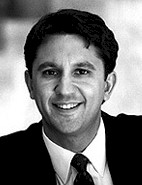
(May 22, 2000) Four term Rep. Rick Lazio, the likely Republican candidate for the U.S. Senate from New York, has a voting record of support for high tech.
Rep. Rick Lazio (R-NY) has voted for bills to extend the moratorium on new and discriminatory Internet taxes, to provide for the acceptance of electronic signatures, to increase the annual cap on H1B visas for high tech workers, and to restrict frivolous class action suits against high tech companies. This is not surprising given that he represents a suburban Long Island district which is the home to an increasing number of high tech workers. Companies such as Computer Associates International are major employers in his district. Moreover, Rep. Lazio is a member of the House Commerce Committee, which has jurisdiction over many high tech bills. He also sits on its Subcommittee on Health and Environment and the Subcommittee on Finance and Hazardous Materials. He is not on the Subcommittee on Telecommunications. However, while Rep. Lazio has a pro tech voting record, he has not been active in sponsoring or cosponsoring high tech related legislation. He has concentrated instead on banking, housing, health, and Long Island issues. He is also on the Committee On Banking And Financial Services, and serves as Chairman of its Subcommittee on Housing and Community Opportunity. He has cosponsored a few key high tech bills. In the current Congress (the 106th) he cosponsored HR 1291, the Internet Access Charge Prohibition Act of 2000. This bill passed the House by a voice vote on May 16, 2000. In the 105th Congress, he was a cosponsor of the Internet Tax Freedom Act, which became law in late 1998. But notably, there are some high tech bills that have a long list of cosponsors, of which Rep. Lazio is not a cosponsor. For example, no encryption bill has ever made it to the House floor for a vote. However, the Security and Freedom through Encryption (SAFE) Act, HR 695 (105th Congress), and HR 850 (106th Congress), have both been cosponsored by over half of the House membership. The bills' lead sponsors, Rep. Bob Goodlatte (R-VA) and Rep. Zoe Lofgren (D-CA), have sought as many cosponsors as possible to demonstrate to a reluctant Clinton administration the extent of support for encryption reform. Rep. Lazio was not a cosponsor of HR 695 in the 105th Congress; and he is not a cosponsor of HR 850 now. Similarly, Congress has long been extending the research and development tax credit. There are many bills which would make permanent this tax credit. Some of these bills, such as HR 835, sponsored by Rep. Nancy Johnson (R-CT), have long cosponsorship lists (164). Rep. Lazio is not a cosponsor of this bill. Most major high tech issues never come to a contested roll call vote on the
House floor. Some bills never make to the floor. Some are passed by voice votes.
Some are included in larger packages of legislation. The table below lists some
of the key votes on high tech bills that were fought out on the House floor, and
how Rep. Lazio voted on them.
| ||||||||||||||||||||||||||||||||||||||||||||||||||||||||||||||||||||||||||||||||||||||||||||||||||||||||||||||||||||||||||||
|